
Artificial Intelligence has quickly become a core driver of modern digital marketing. What once relied on manual analysis and delayed insights is now powered by real-time data and intelligent systems that continuously learn and improve. AI is no longer limited to large enterprises – it is transforming how businesses of all sizes plan, execute, and scale their marketing efforts.
As customer behaviour becomes more complex across multiple platforms and touchpoints, AI enables marketers to understand intent, personalise experiences, and optimise performance at scale. Brands that adapt to this shift gain speed, precision, and a clear competitive advantage, while those that don’t risk falling behind.
In this blog, we’ll explore how AI is reshaping digital marketing, including customer insights, personalisation, advertising, content strategy, and data-driven decision-making and why adopting AI-driven marketing is essential for long-term growth.
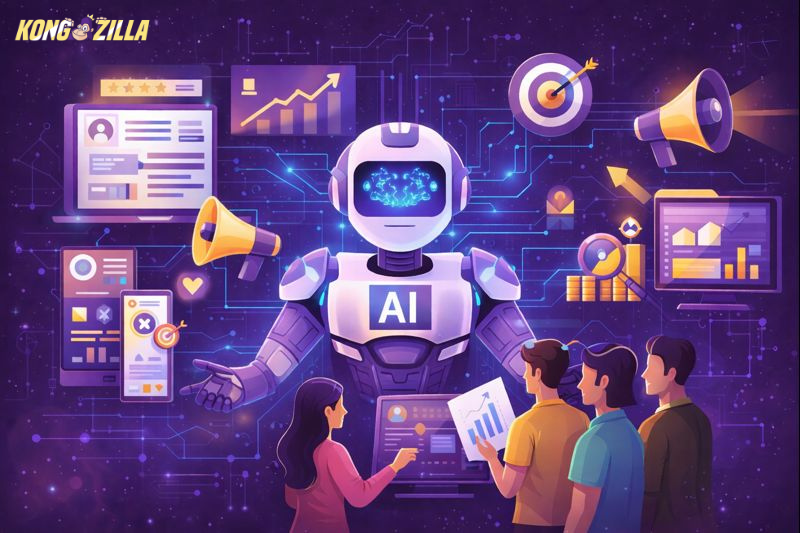
AI Is Changing How Brands Understand Customers
Traditional marketing depended heavily on assumptions, limited surveys, and past performance data. AI changes this approach by analysing large volumes of real-time data from multiple touchpoints, allowing brands to understand customers far more deeply and accurately.
AI systems identify patterns in behaviour, predict intent, and track how users interact with content across platforms. This helps brands understand not just what customers are doing, but why they are doing it. With these insights, businesses can make smarter decisions, refine messaging, and deliver experiences that feel relevant rather than generic.
As a result, marketing becomes more responsive, data-led, and aligned with real customer needs.
Personalisation at Scale
Personalisation is no longer limited to using a customer’s name in an email. AI enables brands to deliver personalised experiences across websites, ads, and content without increasing manual effort.
By analysing behaviour, preferences, and engagement history, AI adapts messaging and offers in real time. Different users see different content based on their intent, stage in the journey, and previous interactions. This level of relevance improves engagement and builds stronger brand connections
Personalised experiences powered by AI typically lead to:
- Higher engagement rates
- Better conversion performance
- Improved customer satisfaction and retention
Smarter Advertising and Budget Optimisation
AI has fundamentally changed how paid advertising works. Instead of relying on static targeting and manual optimisation, AI continuously learns from campaign performance and user behaviour.
Advertising platforms use AI to adjust bids, targeting, and creatives based on what is driving the best results. This ensures budgets are spent where they are most effective, reducing waste and improving returns.
AI-powered advertising helps brands:
- Identify high-performing audiences
- Allocate budgets more efficiently
- Improve conversion rates over time
This leads to more predictable, scalable, and performance-driven growth.
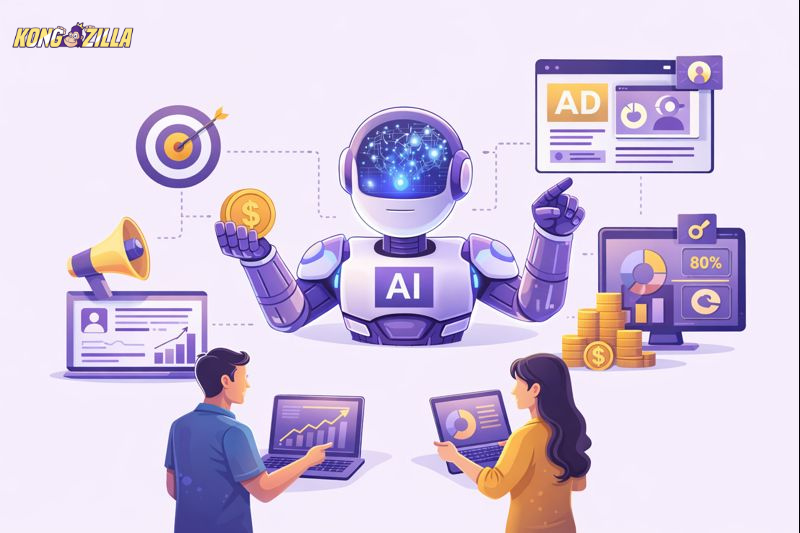
AI in Content Strategy and Creation
AI supports marketers in building more effective content strategies by identifying trends, gaps, and audience intent. It helps brands understand what topics matter, which formats perform best, and how content should be distributed across platforms.
Rather than replacing creativity, AI enhances it. Marketers can use AI insights to plan content more strategically, maintain consistency, and improve relevance while still relying on human creativity for storytelling and brand voice.
When used correctly, AI strengthens content impact without making it feel artificial.
Data-Driven Decision Making
One of AI’s biggest advantages is its ability to remove guesswork from marketing decisions. Instead of relying on intuition, brands can make decisions based on real-time insights and performance data.
AI enables faster analysis, clearer benchmarks, and better forecasting. This allows marketers to respond quickly to trends, optimise campaigns continuously, and focus on strategies that deliver measurable outcomes.
Data-driven decision-making consistently outperforms reactive or assumption-based marketing approaches.
Why AI Adoption Is Critical for Modern Businesses
AI-driven marketing gives businesses an advantage in speed, accuracy, and scalability. As customer behaviour evolves and competition increases, AI allows brands to adapt faster and make smarter decisions.
This is why companies working with a top digital marketing agency in India are increasingly prioritising AI-powered strategies. AI is no longer a competitive edge – it is becoming a requirement for sustainable growth in today’s digital landscape.
Final Thoughts
AI is not replacing marketing – it’s redefining how brands connect, compete, and grow. Businesses that integrate AI into their digital strategies gain deeper insights, smarter execution, and the ability to adapt quickly in an ever-changing digital landscape. Rather than relying on guesswork, AI enables more informed decisions and consistent performance.
The future belongs to brands that successfully combine human creativity with intelligent technology. Those who embrace AI today position themselves for long-term, scalable growth while staying ahead of competitors.
At Kongzilla, we build AI-powered marketing strategies designed to evolve with your business – helping you stay visible, relevant, and competitive across both search engines and AI-driven platforms.
FAQs: AI in Digital Marketing
1. Is AI replacing human marketers?
No. AI enhances human decision-making by handling data analysis and automation, allowing marketers to focus on strategy and creativity.
2. Can small businesses benefit from AI-driven marketing?
Yes. AI tools make advanced marketing insights accessible and cost-effective for businesses of all sizes.
3. Does AI improve marketing ROI?
Yes. AI optimises campaigns in real time, reduces inefficiencies, and improves targeting, leading to better ROI.
4. How can businesses start using AI in marketing?
Start by integrating AI into analytics, automation, and content planning, ideally with expert guidance to ensure scalability and alignment.

